Showing posts with label Snowy Egret. Show all posts

Tuesday, June 28, 2011

Buffet Mixer


There are a variety of benefits to doing things in groups. Consider the last cookout you attended. Someone else bought the food. Someone else cooked and cleaned up. There was less risk of being eaten by a predator. Communal roosting makes sense too. Eating and roosting together makes sense for Great Egrets, Snowy Egrets and White Ibis.

More ears and eyes means predators are at a disadvantage during a sneak attack. While roosting, huddling can conserve warmth for those with the best spots in the roost. The downside is when you head out for breakfast in the morning everyone follows. The older and experienced birds tolerate social parasitism in exchange for safety in numbers. There is a pecking order and bigger birds can dominate others in the flock.
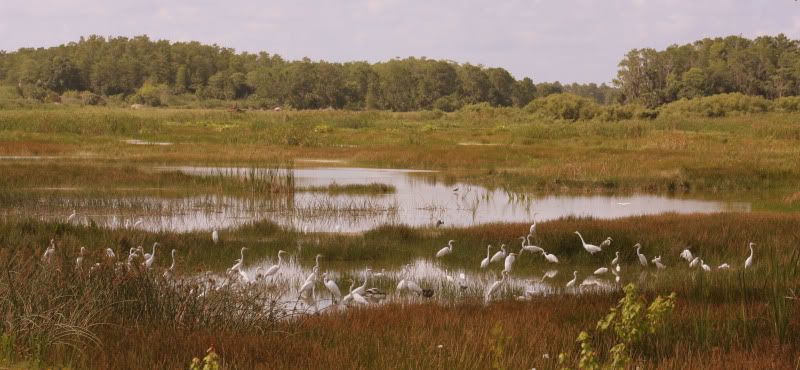


Finding food is also easier with many eyes looking. Once located, the buffet commences. Here a flock of Great White Egrets, Snowy Egrets and a few White Ibis have found a high concentration of fish and frog eggs to feast on.

Around the outskirts of the buffet are Little Blue Herons who are exhibiting commensalism. As the Egrets and Ibis stir things up, the Little Blue Herons feed on what the rest of the birds are not interested in. Essentially commensalism is when one species feeds among others and benefits without harming or benefiting the main species. In this case the Little Blue Heron is the guy that came to the party with the friend you invited. Little Blues are twice as successful when feeding commensally as opposed to individually.

May marked the end of the dry season in Florida which generally runs from December through May 15th. As the wetlands begin to fill with water and prey species re-colonize the marshes and swamps, many of the wading birds will rely less on communal feeding and venture out to forage solo. After a long day of hunting, it’s back to the communal roost for an evening of preening and sleep. Party on.

Wednesday, May 6, 2009

Bird Massacre - A Few Bad Men

(WARNING - gruesome photo below) - During the late 19th Century and early 20th century plumage hunters infamously pillaged the bird rookeries of south Florida - killing hundreds of thousands of birds for their breeding plumage and leaving eggs unincubated and hatchlings to starve or die of exposure. The feathers were used mainly for women's hats - a trendy fashion of the time that drove the price of an ounce of feathers above that of gold. That was over a century ago and the bird populations of many bird species have not recovered.

Yesterday the State of Florida announced it would not pursue charges against three naval officers and 4 other accomplices for killing 21 birds on a nature preserve in Goodland, Florida in the Everglades.

The massacre occurred on February 17th of 2009. Fish and Wildlife officers heard gunshots and watched birds drop out of the sky. Two hours later four people walked from the rookery and three others left in a boat that was loaded with guns and ammunition.

The protected birds included 11 White Ibis, 2 Blue Herons, a Tri-colored Heron and a Snowy Egret. Also pictured but not protected is the Double-crested Cormorant.

Charges were not pursued because:
A) witnesses did not actually see anyone pull the trigger.
B) No prints were found on the weapons. The guns were presumably wiped clean of fingerprints.
C) The confession could not be used in court because the arresting officer had yet to read the person their rights
D) All four "corners" of the Rookery Bay National Estuarine Research Reserve must be posted with No Trespassing signs and fenced. (See map below)


February 18th article in the Naples News
May 6th article

This would not stand if it were people and I won't pretend to understand the complications of the law. There is still a federal investigation into the matter and the naval officers are suspended from active duty but it disgusts me anyway

Monday, December 22, 2008

Light it Up

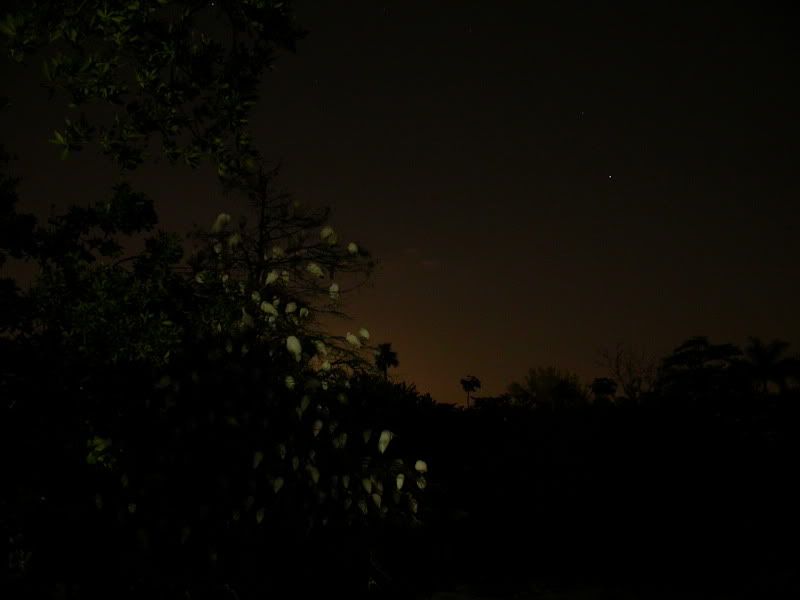
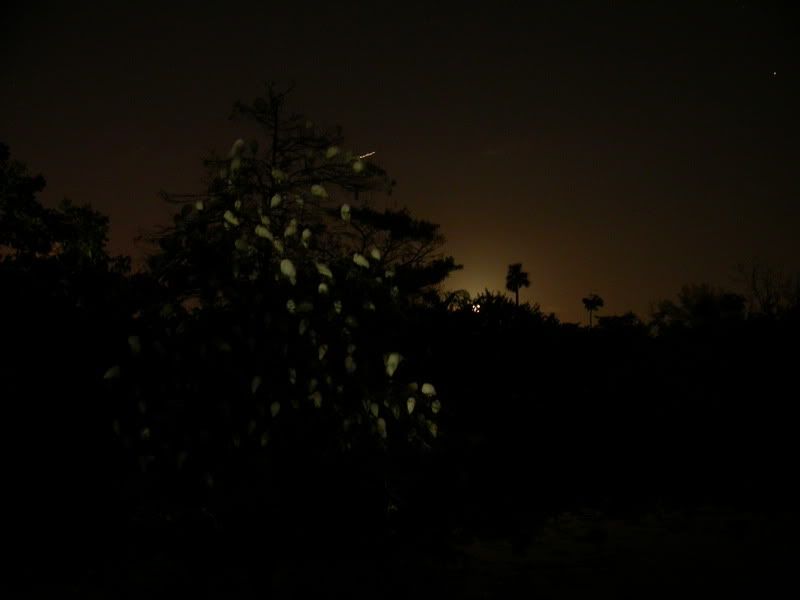
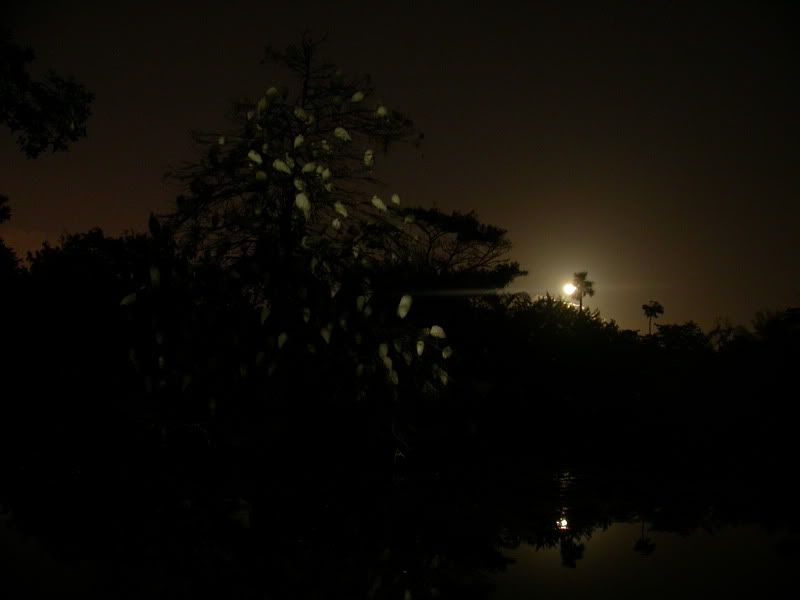
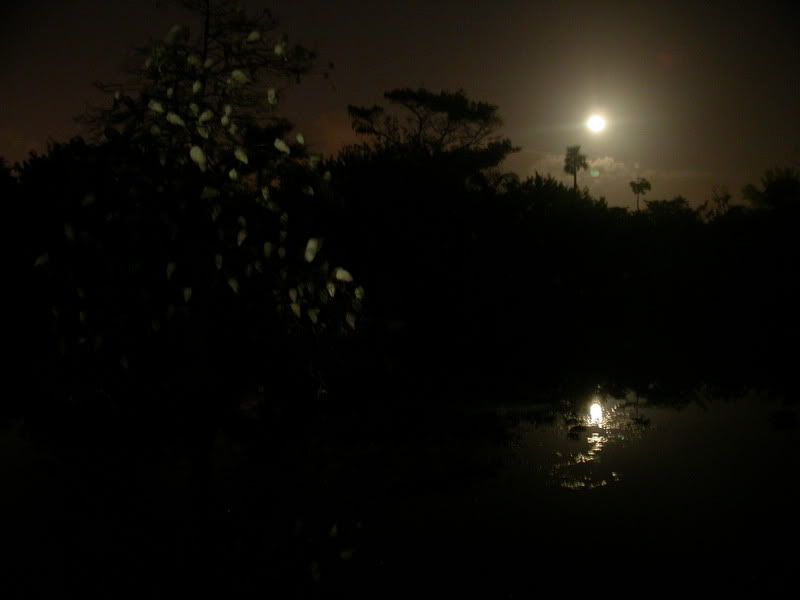
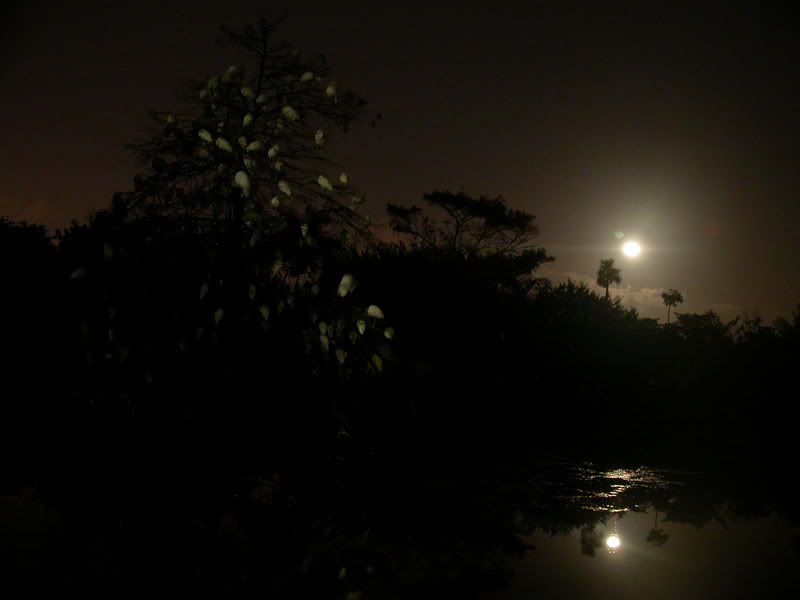
Forget Rockefeller Center. There is no tree more ornate, more spectacular or more literally full of life than what I witnessed a few nights ago. In the middle of the seemingly unending urban sprawl that is the megalopolis of Miami/Fort Lauderdale/West Palm Beach is a little pond rimmed with Bald Cypress that remains as a vestigial wetland behind a massive executive building complex in Oakland Park.

I had stopped just a few hours after sunset in search of a geocache and was wildly distracted by the squawks and croaks that emanated from the darkness. As my eyes adjusted, I fixated on the ever shifting white spots that decorated a Bald Cypress in the middle of the unlit pond. As I continued to listen and watch, a near full moon began to rise directly across the pond, illuminating the Great Egrets, Snowy Egrets and White Ibis that had all taken refuge in this well protected tree.
How fantastic to be in the right place at the right time. Could a scene like this be what inspired the early pagans to decorate trees around the Winter Solstace, a tradition that evolved into today's Christmas trees? Either way - it would inspire my holiday decorations in the days to come.....