There are a variety of benefits to doing things in groups. Consider
the last cookout you attended. Someone else bought the food. Someone else
cooked and cleaned up. There was less risk of being eaten by a predator. Communal
roosting makes sense too. Eating and roosting together makes sense for Great
Egrets, Snowy Egrets and White Ibis.
More ears and eyes means predators are at a disadvantage
during a sneak attack. While roosting, huddling can conserve warmth for those
with the best spots in the roost. The downside is when you head out for
breakfast in the morning everyone follows. The older and experienced birds
tolerate social parasitism in exchange for safety in numbers. There is a
pecking order and bigger birds can dominate others in the flock.
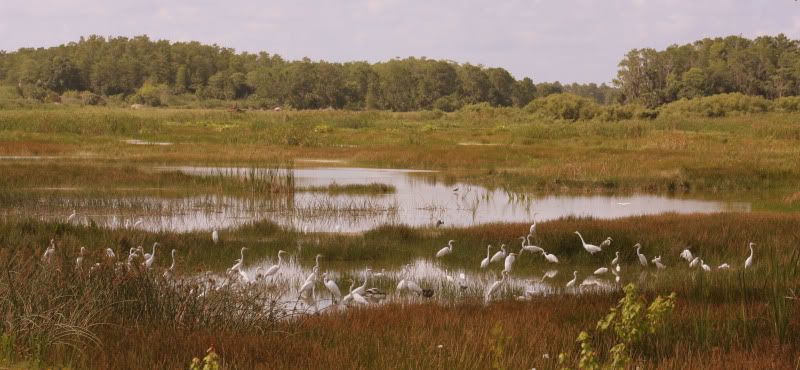
Finding food is also easier with many eyes looking. Once
located, the buffet commences. Here a flock of Great White Egrets, Snowy Egrets
and a few White Ibis have found a high concentration of fish and frog eggs to
feast on.
Around the outskirts of the buffet are Little Blue Herons
who are exhibiting commensalism. As the Egrets and Ibis stir things up, the
Little Blue Herons feed on what the rest of the birds are not interested in.
Essentially commensalism is when one species feeds among others and benefits
without harming or benefiting the main species. In this case the Little Blue
Heron is the guy that came to the party with the friend you invited. Little
Blues are twice as successful when feeding commensally as opposed to
individually.
May marked the end of the dry season in Florida


 During the breeding season, many birds develop special plumes or bright colorations to attract a mate (the teal blue eye of the Anhinga, the crimson legs of the White Ibis). The Great Egret has spectacular tail feathers called aigrettes that were once prized by plumage hunters. They appear wispy and delicate and have a yellowed - burnt marshmallow appearance towards there tips.
  In the late 19th and early part of the 20th century, plumage hunters sought out rookeries where they would slaughter nesting birds and take their feathers. Chicks were left to starve. Eggs left unincubated never hatched. The feathers were used for decoration and specifically for women's hats that were all the rage at the time. In 1908 - an ounce of plumes was worth more than an ounce of gold.
  Great Blue Herons, Flamingos, Roseate Spoonbills, Wood Storks, Egrets and other bird populations were severely impacted by this less than noble trade.
 When the plume rage was exposed as murderous fashion, the rage of the nation led to federal legislation banning the sale of plumes. Populations have been slow to rebound over the many decades that have passed and some say for every Great Egret you see today - you might have seen 10 a century ago.
  Here at the rookery, Wood Stork nests far outnumber Great Egret nests. Nevertheless, courtship continues as Egrets flash their aigrettes like a Peacock (since the courtship period is over - I don't have a shot of this). Mates are wooed. Eggs are laid. Chicks are born.
  Here -one of several chicks pesters an adult for partially digested fish.
 We can be thankfull in large part to the